Fashion or tradition?
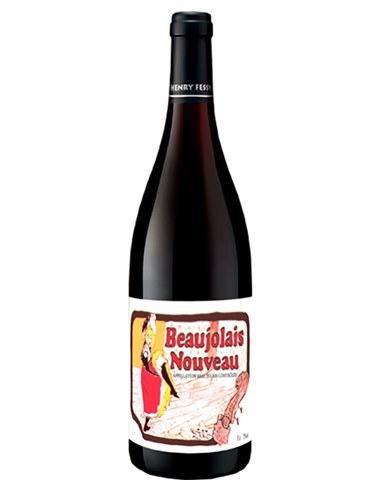
In the 1980s Beaujolais Nouveau became a worldwide phenomenon, with marketing campaigns and races to serve the first bottle. Such success had its downside: many people began to see all Beaujolais as a simple wine, when the region also makes serious wines for ageing, such as those from its ten crus (Morgon, Fleurie and Moulin-à-Vent, among others).
It is still a phenomenon today: in the 2025 campaign some 13.8 million bottles of Beaujolais and Beaujolais Villages Nouveau were sold, 21% of everything the region sells, in more than 100 countries. And the leading market isn't France but Japan, with 1.8 million bottles.
My view as a sommelier: it is both. It is a fashion that has been well used, yes, but built on a genuine tradition of growers celebrating their work. And more and more producers are making Nouveau with great care, which is well worth discovering.
How to enjoy it
- Slightly chilled: serve it at around 13 °C. A red like this at room temperature loses all its charm.
- Drink it soon: it is meant to be enjoyed in the months after its release. It doesn't improve with age.
- With simple food: cold cuts, mild cheeses, a charcuterie board, roast chicken or a pizza. Nothing that overpowers it.
- No ceremony: it is a wine for sharing and toasting, not for analysing for half an hour.
Our own new wine
Beaujolais Nouveau always reminds me of our November traditions in the Canary Islands: opening the new wine on Saint Martin's Day, with chestnuts and friends. Deep down it is the same thing: celebrating the harvest before the wine grows up.
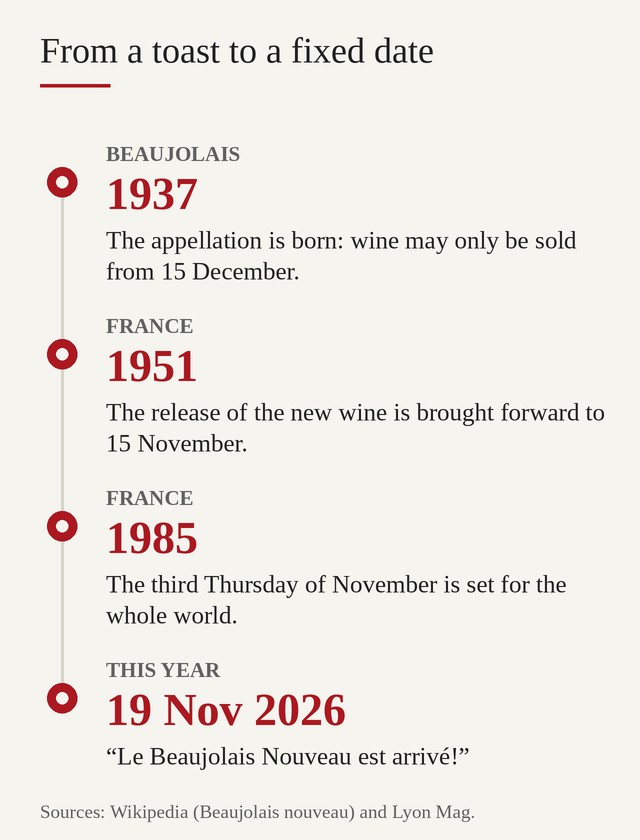
And you? Will you open a bottle on 19 November, or do you prefer the local new wine?
Vino Esencial
Of course, Beaujolais and its wines have their place in my book Vino Esencial, alongside the great wine regions of the world.
Don't have the book yet? Click hereIván Monreal Somm. Culture, history and passion for wine.
Sources: Wikipedia, “Beaujolais nouveau” · Lyon Mag, “Beaujolais Nouveau 2026: rendez-vous le 19 novembre”
Back to the blog